MULTITUDE OF BLOGS None of the PDFs are my own productions. I've collected them from web (e-mule, avax, libreremo, socialist bros, cross-x, gigapedia..) What I did was thematizing. This blog's project is to create an e-library for a Heideggerian philosophy and Bourdieuan sociology Φ market-created inequalities must be overthrown in order to close knowledge gap. this is an uprising, do ya punk?

Wednesday, April 23, 2008

Jean-Luc Nancy - A Finite Thinking

MADE IN ISTANBUL

A Finite Thinking
(Cultural Memory in the Present)
by Jean-Luc Nancy

# Paperback: 348 pages
# Publisher: Stanford University Press; 1 edition (October 6, 2003)

This book is a rich collection of philosophical essays radically interrogating key notions and preoccupations of the phenomenological tradition. While using Heidegger’s Being and Time as its permanent point of reference and dispute, this collection also confronts other important philosophers, such as Kant, Nietzsche, and Derrida. The projects of these pivotal thinkers of finitude are relentlessly pushed to their extreme, with respect both to their unexpected horizons and to their as yet unexplored analytical potential. A Finite Thinking shows that, paradoxically, where the thought of finitude comes into its own it frees itself, not only to reaffirm a certain transformed and transformative presence, but also for a non-religious reconsideration and reaffirmation of certain theologemes, as well as of the body, heart, and love. This book shows the literary dimension of philosophical discourse, providing important enabling ideas for scholars of literature, cultural theory, and philosophy.

via dolorosa

The Ghost of Theology - Readings of Kant and Hegel

The Ghost of Theology - Readings of Kant and Hegel

here is a special issue of Diacritics

Diacritics, Vol. 11, No. 2, The Ghost of Theology: Readings of Kant and Hegel. (Summer, 1981):


wonder!

Hegel, Kant and the Structure of the Object

Hegel Kant & Structure Object CL (Hardcover)
by Robert Stern

# Hardcover: 184 pages
# Publisher: Routledge; 1 edition (April 26, 1990)

go

Kant (Routledge Philosophers) by Paul Guyer

Kant (Routledge Philosophers)
by Paul Guyer

# Hardcover: 456 pages
# Publisher: Routledge; 1 edition (August 18, 2006)

Kant is an absolutely first-rate general introduction to Kant's Critical Philosophy. Paul Guyer's interpretations are extremely well-supported, carefully and crisply argued, and highly insightful.
–Robert Hanna, University of Colorado

An impressive overview of the various strands of Kant's philosophy. With great skill Guyer manages to compress Kant's critical thought into a few hundred pages. This book will provide an excellent introduction to Kant's thought.
–Philip Stratton-Lake, University of Reading

The book is impressive in very many ways. It demonstrates a mastery of the Kantian corpus and an ability to explain exceedingly complex arguments in a clear and accessible fashion. I think it will become essential reading for students wanting to grasp the broad sweep of Kant's thought without losing much by way of depth.
–Andrew Chignell, Cornell University

That Guyer is able to cover thismuch material, clearly and without oversimplification, in a single, reasonably sized volume represents a unique accomplishment, which should prove to be extremely useful to a broad audience.
–Eric Watkins, University of California, San Diego


Product Description
Immanuel Kant (1724-1804) is arguably the most influential of the Enlightenment Philosophers. In this outstanding introduction, Paul Guyer introduces and assesses all the major aspects of Kant's thought.

Beginning with a helpful overview of Kant's life and times, Guyer introduces the "Copernican revolution" Kant brought about in metaphysics and epistemology, carefully introducing his arguments about the nature of experience, space and time in his most influential but difficult work, The Critique of Pure Reason. He gives a much-needed explanation of Kant's famous theory of transcendental idealism, a cornerstone of his philosophy as a whole.

He then examines Kant's moral philosophy, clearly explaining Kant's celebrated "categorical imperative" and his theories of duty, freedom of the will, and rights. Finally, he covers Kant's aesthetics, in particular his arguments about the nature of beauty and the sublime and their relation to human freedom and happiness.

A concluding chapter considers Kant's legacy and his influence on the shape of contemporary philosophy.

Kant is an ideal starting point for anyone coming to the philosopher for the first time, as well as those studying Kant in related disciplines.


go

Kant and the Demands of Self-Consciousness

Kant and the Demands of Self-Consciousness
by Pierre Keller

# Paperback: 294 pages
# Publisher: Cambridge University Press; 1 edition (March 26, 2001)

Pierre Keller examines Kant's theory of self-consciousness and argues that it succeeds in explaining how both subjective and objective experience are possible. He argues for a new understanding of Kant's conception of self-consciousness as the capacity to abstract not only from what one happens to be experiencing, but also from one's own personal identity. By developing this new interpretation he is able to argue that transcendental self-consciousness underwrites a general theory of objectivity and subjectivity at the same time.

go

Kant's Groundwork of the Metaphysics of Morals: A Commentary

Kant's Groundwork of the Metaphysics of Morals: A Commentary
by Jens Timmermann

# Hardcover: 224 pages
# Publisher: Cambridge University Press (July 16, 2007)

The Groundwork of the Metaphysics of Morals is Kant's central contribution to moral philosophy, and has inspired controversy ever since it was first published in 1785. Kant champions the insights of 'common human understanding' against what he sees as the dangerous perversions of ethical theory. Morality is revealed to be a matter of human autonomy: Kant locates the source of the 'categorical imperative' within each and every human will. However, he also portrays everyday morality in a way that many readers find difficult to accept. The Groundwork is a short book, but its argument is dense, intricate and at times treacherous. This commentary explains Kant's arguments paragraph by paragraph, and also contains an introduction, a synopsis of the argument, six short interpretative essays on key topics of the Groundwork, and a glossary of key terms. It will be an indispensable tool for anyone wishing to study the Groundwork in detail.

go

Kant, Science, and Human Nature

Kant, Science, and Human Nature
by Robert Hanna

# Hardcover: 512 pages
# Publisher: Oxford University Press, USA (December 7, 2006)

Robert Hanna argues for the importance of Kant's theories of the epistemological, metaphysical, and practical foundations of the "exact sciences"--relegated to the dustbin of the history of philosophy for most of the 20th century. In doing so he makes a valuable contribution to one of the most
active and fruitful areas in contemporary scholarship on Kant.


go

Kant's Doctrine of Transcendental Illusion

Kant's Doctrine of Transcendental Illusion
(Modern European Philosophy)
by Michelle Grier

# Hardcover: 330 pages
# Publisher: Cambridge University Press; 1 edition (February 5, 2001)

This major study of Kant provides a detailed examination of the development and function of the doctrine of transcendental illusion in his theoretical philosophy. The author shows that a theory of 'illusion' plays a central role in Kant's arguments about metaphysical speculation and scientific theory. Indeed, she argues that we cannot understand Kant unless we take seriously his claim that the mind inevitably acts in accordance with ideas and principles that are 'illusory'. Taking this claim seriously, we can make much better sense of Kant's arguments and reach a deeper understanding of the role he allots human reason in science.

go

Kant on Beauty and Biology: An Interpretation of the 'Critique of Judgment'

Kant on Beauty and Biology: An Interpretation of the 'Critique of Judgment'
(Modern European Philosophy)
by Rachel Zuckert

# Hardcover: 424 pages
# Publisher: Cambridge University Press (September 17, 2007)

Kant's Critique of Judgment has often been interpreted by scholars as comprising separate treatments of three uneasily connected topics: beauty, biology, and empirical knowledge. Rachel Zuckert's book is the first to interpret the Critique as a unified argument concerning all three domains. She argues that on Kant's view, human beings demonstrate a distinctive cognitive ability in appreciating beauty and understanding organic life: an ability to anticipate a whole that we do not completely understand according to preconceived categories. This ability is necessary, moreover, for human beings to gain knowledge of nature in its empirical character as it is, not as we might assume it to be. Her wide-ranging and original study will be valuable for readers in all areas of Kant's philosophy.
go

Kant - Notes and Fragments

Notes and Fragments
(The Cambridge Edition of the Works of Immanuel Kant in Translation)
by Immanuel Kant
Paul Guyer (Translator), Curtis Bowman (Translator), Frederick Rauscher (Translator)

# Hardcover: 690 pages
# Publisher: Cambridge University Press (March 21, 2005)

This volume provides the first ever extensive translation of the notes and fragments that survived Kant's death in 1804. These include marginalia, lecture notes, and sketches and drafts for his published works. They are important as an indispensable resource for understanding Kant's intellectual development and published works, casting new light on Kant's conception of his own philosophical methods and his relations to his predecessors, as well as on central doctrines of his work such as the theory of space, time and categories, the refutations of skepticism and metaphysical dogmatism, the theory of the value of freedom and the possibility of free will, the conception of God, the theory of beauty, and much more.

go

Groundwork for the Metaphysics of Morals with Essays

Groundwork for the Metaphysics of Morals (Paperback)
by Immanuel Kant (Author), Allen W. Wood (Editor)

# Paperback: 224 pages
# Publisher: Yale University Press (November 1, 2002)

Lucy Allais, University of Sussex
...if I had to choose an ideal edition(...)for courses on Kant, it would certainly be this one. --This text refers to the Paperback edition.

Paul Guyer, University of Pennsylvania
...this volume is a brilliant introduction to one of the greatest works in the history of Western philosophy. --This text refers to the Paperback edition.

go

Kant - Critique of the Power of Judgment

Critique of the Power of Judgment
(The Cambridge Edition of the Works of Immanuel Kant in Translation)
by Immanuel Kant
Paul Guyer (Translator), Eric Matthews (Translator)

# Paperback: 476 pages
# Publisher: Cambridge University Press; 1 edition (December 3, 2001)

go

Kantian Consequentialism

Kantian Consequentialism
by David Cummiskey

# Hardcover: 208 pages
# Publisher: Oxford University Press, USA (January 18, 1996)


"A major contribution to moral philosophy. It is an impressive, original, and stimulating book.--Shelly Kagan, University of Illinois, Chicago

"The deontological nature of Kantian moral theory is challenged in this provocative book by David Cummiskey...This is a bold book that provides careful and provocative arguments...[O]ne should look forward to further defense and development from its author."--Ethics

"This is a richly interesting and well-researched book. It contains provocative and important arguments concerning central elements of Kantian ethics, agent-centered constraints, and a new form of consequentialism."--The Philosophical Review

Product Description
The central problem for normative ethics is the conflict between a consequentialist view--that morality requires promoting the good of all--and a belief that the rights of the individual place significant constraints on what may be done to help others. Standard interpretations see Kant as
rejecting all forms of consequentialism, and defending a theory which is fundamentally duty-based and agent-centered. Certain actions, like sacrificing the innocent, are categorically forbidden. In this original and controversial work, Cummiskey argues that there is no defensible basis for this
view, that Kant's own arguments actually entail a consequentialist conclusion. But this new form of consequentialism which follows from Kant's theories has a distinctly Kantian tone. The capacity of rational action is prior to the value of happiness; thus providing justification for the view that
rational nature is more important than mere pleasures and pains.
go

The Bounds of Sense: An Essay on Kant's Critique of Pure Reason

The Bounds of Sense: An Essay on Kant's Critique of Pure Reason
by P. F. Strawson

# Paperback: 296 pages
# Publisher: Routledge (December 31, 1990)

This influential study of Kant in which Strawson seeks to detach the true analytical and critical achievement of Kant's work from the unacceptable metaphysics with which it is entangled.

go

Body and Practice in Kant


Body and Practice in Kant
(Studies in German Idealism)
by Helge Svare

# Hardcover: 328 pages
# Publisher: Springer; 1 edition (December 22, 2005)

Kant is generally conceived to have offered little attention to the fact that we experience the world in and through our bodies. This book argues that this standard image of the great German philosopher is radically wrong. Not only does Kant - throughout his career and in works published before and after the Critique of pure reason - reflect constantly upon the fact that human life is embodied, but the Critique of pure reason itself may be read as a critical reflection aimed at exploring some significant philosophical implications of this fact. Bringing this aspect of Kant's philosophy into focus is important, not only because it sheds new light on our understanding of Kant's work, but also because it is relevant to contemporary discussions in philosophy about embodiment, learning and practice. By taking his philosophy of embodiment into account, the author makes Kant stand out as a true contemporary in new and unexpected ways.


go

Friday, March 28, 2008

Rhizosphere: Deleuze and the 'Minor' American Writings of W. James, Du Bois, G.Stein, Toomer, and Falkner


Rhizosphere: Gilles Deleuze and the 'Minor' American Writings of William James, W.E.B. Du Bois, Gertrude Stein, Jean Toomer, and William Falkner
(Literary Criticism and Cultural Theory)
by Mary Zamberlin

Hardcover: 206 pages
Publisher: Routledge; 1 edition (April 20, 2006)

This book explores the significant intellectual impact the philosopher Jean Wahl had on the directions Gilles Deleuze took as a philosopher and writer of a philosophy of experimentation. The study of this influence also brings to light the significance of Deleuze's emphasis on "la pragmatique," inspired by Wahl's writings and teachings and his fascination with American pluralism and pragmatism, particularly that of William James. This book also attempts to put Deleuze's theories into action, to write in a deleuzian way about American "minor" literature and thought which Deleuze deemed "superior." This text inherently challenges and potentially provides an alternative way of reading/writing to standard critical approaches which Deleuze tells us necessarily reduce and distort a "minor" work's most lively, subtle and micro-politically efficient elements as they abort them from their "minoritarian" fields of meaning to coerce them into already existing, standard and standardizing concepts that belongto and reinforce the "Major Order's" organizational grid.

“It is not by means of an exegetical practice that one could hope to keep alive the thought of a great thinker who has passed away. Rather, such a thought can only be kept alive through its renewal, by putting it back into action, reopening its questioning, and by preserving its distinct uncertainties- with all the risks that this entails for those who make the attempt.” Félix Guattari

Gilles Deleuze and the Ruin of Representation


Gilles Deleuze and the Ruin of Representation
by Dorothea Olkowski

Paperback: 310 pages
Publisher: University of California Press; 1 edition (October 28, 1999)

Dorothea Olkowski's exploration of the philosophy of Gilles Deleuze clarifies the gifted French thinker's writings for specialists and nonspecialists alike. Deleuze, she says, accomplished the "ruin of representation," the complete overthrow of hierarchic, organic thought in philosophy, politics, aesthetics, and ethics, as well as in society at large. In Deleuze's philosophy of difference, she discovers the source of a new ontology of change, which in turn opens up the creation of new modes of life and thought, not only in philosophy and feminism but wherever creation is at stake.
The work of contemporary artist Mary Kelly has been central to Olkowski's thinking. In Kelly she finds an artist at work whose creative acts are in themselves the ruin of representation as a whole, and the text is illustrated with Kelly's art. This original and provocative account of Deleuze contributes significantly to a critical feminist politics and philosophy, as well as to an understanding of feminist art.

From the Inside Flap
"Gilles Deleuze and the Ruin of Representation will undoubtedly contribute to a renewed understanding of this important twentieth-century philosopher. . . . [It] contains some of the very best and clearest accounts of Difference and Repetition and The Logic of Sense, and an account of Bergson, and Deleuze's reading of Bergson, that is simply the most compelling I have read in English."--David N. Rodowick, author of Gilles Deleuze: Time Machine


"Revolutionaries, artists, and seers are content to be objective, merely objective: they know that desire clasps life in its powerfully productive embrace, and reproduces it in a way that is all the more intense because it has few needs. And never mind those who believe that this is very easy to say, or that it is the sort of idea to be found in books." Deleuze & Guattari

Deleuze and the Political


Deleuze and the Political
(Thinking the Political)
by Paul Patton

Hardcover: 176 pages
Publisher: Routledge; 1 edition (September 1, 2000)

An outstanding contribution to Deleuze studies and a significant achievement in political philosophy.
–Ronald Bogue, University of Georgia
Patton's monograph is addressed to political philosophers, but it will also be of interst to religion scholars interested in ideology, postcolonialism, and other points of connection between religion and society. His examples come from political through, but the larger issues addressed will appeal to anyone interested in the ideological functioning of individuals and communities.
–Religious Studies Review

go

Deleuze and Guattari's Anti Oedipus: Introduction to Schizoanalysis


Deleuze and Guattari's Anti Oedipus: Introduction to Schizoanalysis
by Eugene Holland

Hardcover: 161 pages
Publisher: Routledge; 1 edition (August 4, 1999)

Charles J. Stivale, Wayne State University
"Holland admirably faces the challenge of opening up Deleuze and Guattari's notoriously difficult Anti-Oedipus not only to newcomers, but also to experienced readers of their works, who will thereby benefit enormously from the clarity and rigor of Holland's study."!

Review
STRONG 'Holland's introduction ... is suitable both for those who are reluctant to begin /STRONG EM Anti-Oedipus /EM STRONG due to its notorious reputation for complexity, and for those who are, even after four hundred pages of reading, not certain of its key concept. Holland states that his aim will have been achieved if readers want to turn to /STRONG EM Anti-Oedipus /EM STRONG after reading his introduction ... [if so] the book has admirably reached its aim not only at the end of the book but also at the end of every chapter.' /STRONG - EM Psychoanalytical Studies /EM

go

Germinal Life: The Difference and Repetition of Deleuze


Germinal Life: The Difference and Repetition of Deleuze
by Ansell-Pearson
Paperback: 284 pages
Publisher: Routledge; 1 edition (April 1, 1999)


Elizabeth Grosz, Monash University
"This is a very important book which moves beyond current interpretations of Deleuze."

Brian Massumi, Australian National University.
"Highly accomplished and admirably innovative. Keith Ansell Pearson is an energetic and insightful reader of Deleuze, matched also by the depth of his knowledge of biological literature

go

Gilles Deleuze: An Apprenticeship in Philosophy by Michael Hardt


Gilles Deleuze: An Apprenticeship in Philosophy
by Michael Hardt

Paperback: 139 pages
Publisher: University of Minnesota Press (April 1993)

from a review on amazon:
Hardt's book on Deleuze can be applauded for two reasons: its careful reading of Deleuze's texts and its attempt to situate them critically among continental philosophy. Hardt is a clear writer, and his insights are often quite powerful and suggestive. However, like most writer on Deleuze his "deleuzian" reading seeks too much to reconfigure the texts (Bergson, Nietzsche,and Spinoza). Beyond Hardt's text stands the imposing shadow of Hegel -- perhaps my only hesitation with its analysis. There is a desire to find unity in difference however radical this difference might be. The key problem of scholarship on Deleuze seem to be precisely how to read him -- is the project Deleuze has laid out to reread his texts as he has reread others? How is one to be Deluezian? This said, Hardt's work is exceptional in most areas.

go

Gilles Deleuze's Time Machine


Gilles Deleuze's Time Machine
(Post-Contemporary Interventions)
by David N. Rodowick

Paperback: 280 pages
Publisher: Duke University Press (December 1997)

Although Gilles Deleuze is one of France’s most celebrated twentieth-century philosophers, his theories of cinema have largely been ignored by American scholars. Film theorist D. N. Rodowick fills this gap by presenting the first comprehensive study, in any language, of Deleuze’s work on film and images. Placing Deleuze’s two books on cinema—The Movement-Image and The Time-Image—in the context of French cultural theory of the 1960s and 1970s, Rodowick examines the logic of Deleuze’s theories and the relationship of these theories to his influential philosophy of difference.
Rodowick illuminates the connections between Deleuze’s writings on visual and scientific texts and describes the formal logic of his theory of images and signs. Revealing how Deleuzian views on film speak to the broader network of philosophical problems addressed in Deleuze’s other books—including his influential work with Félix Guattari—Rodowick shows not only how Deleuze modifies the dominant traditions of film theory, but also how the study of cinema is central to the project of modern philosophy.

go

Neuropolitics: Thinking, Culture, Speed


Neuropolitics: Thinking, Culture, Speed
(Theory Out of Bounds, Number 23)
by William E. Connolly

Why would a political theorist venture into the nexus between neuroscience and film? According to William Connolly-whose new book is itself an eloquent answer-the combination exposes the ubiquitous role that technique plays in thinking, ethics, and politics. By taking up recent research in neuroscience to explore the way brain activity is influenced by cultural conditions and stimuli such as film technique, Connolly is able to fashion a new perspective on our attempts to negotiate-and thrive-within a deeply pluralized society whose culture and economy continue to quicken.
In Neuropolitics Connolly draws upon recent brain/body research to explore the creative potential of thinking, the layered character of culture, the cultivation of ethical sensibilities, and the critical role of technique in all three. He then shows how a series of films-including Vertigo, Five Easy Pieces, and Citizen Kane-enhances our appreciation of technique and contests the linear image of time now prevalent in cultural theory.

Connolly deftly brings these themes together to support an ethos of deep pluralism within the democratic state and a politics of citizen activism across states. His book is an original and rigorous study that attends to the creative possibilities of thinking in identity, culture, and ethics.

go

Deleuze And the Unconscious


Deleuze And the Unconscious
(Continuum Studies in Continental Philosophy)
by Christian Kerslake

Hardcover: 246 pages
Publisher: Continuum International Publishing Group (May 8, 2007)

Deleuze and the Unconscious presents a groundbreaking and provocative re-reading of the complex relationship between the disicpline of psychoanalysis and the work of eminent philosopher Gilles Deleuze. Beginning with an exploration of Deleuze's debt to Jungian psychology and Bergson's view of the unconscious, the book goes on to argue for the relevance for psychoanalytic theory of the major works, Difference and Repetition and Logic of Sense. Kerslake concludes with an account of Anti-Oedipus that shows it, in the light of what has gone before, to be less an attack on psycholoanalysis per se, than an exposure of specific failures in the systems of Freud and Lacan.

does anyone know who is this boy?

Deleuze and Guattari: An Introduction to the Politics of Desire


Deleuze and Guattari: An Introduction to the Politics of Desire
(Published in association with Theory, Culture & Society)
by Philip Goodchild

Hardcover: 240 pages
Publisher: Sage Publications Ltd (December 23, 1996)

Both accessible and definitive, Deleuze and Guattari provides a critical examination of the writing of two notoriously difficult thinkers. This important introduction is divided into three sections--knowledge, power, and desire--and provides a systematic account of the intellectual context as well as an exhaustive analysis of the key themes informing Deleuze and Guattari's work. Providing a framework for reading the important and influential study Capitalism and Schizophrenia, this volume is attentive to the needs of the student by providing a lexicon of the difficult ideas used in Deleuze and Guattari's discussion of philosophy, art, and politics. Deleuze and Guattari is an important addition to the critical literature on some of the most challenging work in recent social theory. It will be the standard introduction to Deleuze and Guattari for students of philosophy and social theory.

go

French Philosophy in the Twentieth Century by Gary Gutting


French Philosophy in the Twentieth Century
by Gary Gutting

Paperback: 432 pages
Publisher: Cambridge University Press; 1 edition (May 21 2001)

French philosophers have a reputation as some of the most perplexing. American readers tend to dismiss them with a huff or venerate them over cigarettes and coffee. Gary Gutting does neither. His approach in French Philosophy in the Twentieth Century is scholarly, judicious, and clear. The result is an exceptional look at a rich philosophical tradition. Gutting is one of the world's leading authorities on the work of Michel Foucault, and his depth on the century's other Gallic thinkers is comparable. The book is more than a general survey; it is a careful history of ideas, as well as an excellent series of essays on the main French thinkers of the last 100 years.
Gutting devotes much of his time to the half dozen giants of recent French thought: Henri Bergson, Jean-Paul Sartre, Simone de Beauvoir, Maurice Merleau-Ponty, Foucault, and Jacques Derrida. Of course, there are legions of other influences--such as Marcel, Saussure, Lévi-Strauss, Lacan, Kristeva, Lyotard, Deleuze, Irigaray, Levinas--and these get attention too, though in fewer pages. Gutting weaves the book together with a narrative history that accounts for the influences of literature and German thought. In addition, the carefully selected chapter epigraphs do more than supplement the text; they are windows into the vivid philosophy of Marcel Proust's literature. --Eric de Place

run 75mb's

Deleuze - Proust and Signs


Proust and Signs: The Complete Text
by Gilles Deleuze
Richard Howard (Translator)

Paperback: 160 pages
Publisher: University of Minnesota Press (2004)

In the 1972 edition of this book, which makes up the first part of this title, Deleuze examines signs emitted by persons and events in Marcel Proust's In Search of Lost Time. In one interesting chapter, "The Secondary Role of Memory," Deleuze illustrates how voluntary memory interprets inaccurately the signs to be deciphered. The jealous lover, for example, cannot accurately decipher the deceptions of his beloved. The second part of Deleuze's book is an addition to the 1972 edition. Here, Deleuze demonstrates how Proust's book, because of the multiplication of signs, becomes a literary machine, really three literary machines: of partial objects or impulses, of resources, and of forced moments. According to Deleuze, Proust or the narrator is the "universal schizophrenic" whose signs weave a spider web by sending out threads to the paranoiac Charlus and the erotomaniac Albertine, all "marionettes of his own delirium" or "profiles of his own madness." This is not easy reading, but the book will prove to be very useful to literary critics or comparativists.DBob Ivey, Univ. of Memphis
Copyright 2000 Reed Business Information, Inc.

Book Description
In a remarkable instance of literary and philosophical interpretation, the incomparable Gilles Deleuze reads Marcel Proust's work as a narrative of an apprenticeship-more precisely, the apprenticeship of a man of letters. Considering the search to be one directed by an experience of signs, in which the protagonist learns to interpret and decode the kinds and types of symbols that surround him, Deleuze conducts us on a corollary search-one that leads to a new understanding of the signs that constitute A la recherche du temps perdu.
In Richard Howard's graceful translation, augmented with an essay that Deleuze added to a later French edition, Proust and Signs is the complete English version of this work. Admired as an imaginative and innovative study of Proust and as one of Deleuze's more accessible works, Proust and Signs stands as the writer's most sustained attempt to understand and explain the work of art.

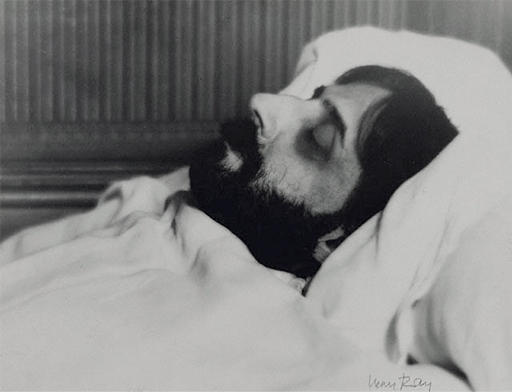
at deathbed

Deleuze - Logic Of Sense


Logic Of Sense
(Continuum Impacts)
by Gilles Deleuze

Paperback: 393 pages
Publisher: Columbia University Press (April 15, 1990)

"One of the most important and influential works from a leading figure in French poststructuralist philosophy." -- Choice
"Perhaps one day, this century will be known as Deleuzian." -- Michel Foucault

go

Deleuze - Francis Bacon: The Logic of Sensation


Francis Bacon: The Logic of Sensation
by Gilles Deleuze

Paperback: 224 pages
Publisher: Univ Of Minnesota Press; 1 edition (May 25, 2005)

Translated and with an Introduction by Daniel W. Smith
Afterword by Tom Conley

Gilles Deleuze had several paintings by Francis Bacon hanging in his Paris apartment, and the painter’s method and style as well as his motifs of seriality, difference, and repetition influenced Deleuze’s work. This first English translation shows us one of the most original and important French philosophers of the twentieth century in intimate confrontation with one of that century’s most original and important painters.

In considering Bacon, Deleuze offers implicit and explicit insights into the origins and development of his own philosophical and aesthetic ideas, ideas that represent a turning point in his intellectual trajectory. First published in French in 1981, Francis Bacon has come to be recognized as one of Deleuze’s most significant texts in aesthetics. Anticipating his work on cinema, the baroque, and literary criticism, the book can be read not only as a study of Bacon’s paintings but also as a crucial text within Deleuze’s broader philosophy of art.

In it, Deleuze creates a series of philosophical concepts, each of which relates to a particular aspect of Bacon’s paintings but at the same time finds a place in the “general logic of sensation.” Illuminating Bacon’s paintings, the nonrational logic of sensation, and the act of painting itself, this work—presented in lucid and nuanced translation—also points beyond painting toward connections with other arts such as music, cinema, and literature. Francis Bacon is an indispensable entry point into the conceptual proliferation of Deleuze’s philosophy as a whole.

go

Deleuze and Philosophy by Boundas


Deleuze and Philosophy
by Constantin V. Boundas

Paperback: 320 pages
Publisher: Edinburgh University Press (August 30, 2006)

Deleuze and Philosophy is an enticing exploration of the continuing philosophical relevance of Gilles Deleuze. New essays from acclaimed international contributors place Deleuze within a broad philosophical context that includes Plato, Aristotle, Husserl, Hume, Locke, Kant, Foucault, Badiou, and Agamden.

go